


Toenail fungus is called onychomycosis.Initially, the infectious process affects the thumb, but as it develops it spreads to others.The disease goes through several stages.The sooner treatment is started, the easier it is to cope with the problem.This is especially true in relation to the thumbnail of the lower limb: it has a large bed and size, so the extent of the damage is significant.
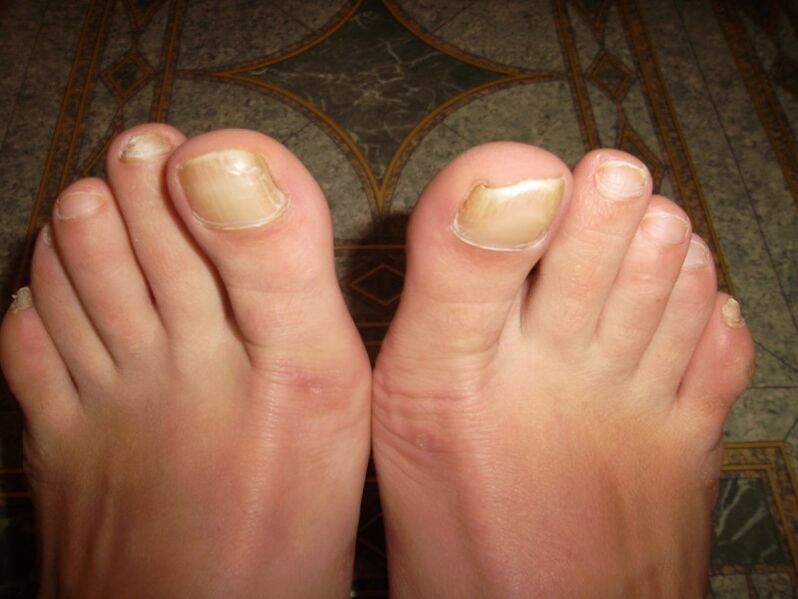
Stages of onychomycosis
Nail fungus goes through several stages of development, each of which is characterized by certain symptoms.There are the following stages of development of the disease:
- Initial.At this stage, no visible pathological deviations are observed: the changes are still external in nature.The nail plates on the fingers of the lower extremities lose their shine.White spots or stripes appear on the surface.In general, the nail looks healthy and the person does not feel pain or discomfort.If onychomycosis is detected at this stage, you can quickly get rid of it.
- Average or progressive.The structure of the nail is already subject to pathological changes.The plate acquires a pronounced yellowish tint, flakes and breaks.There is also an unpleasant odor emanating from the affected foot.
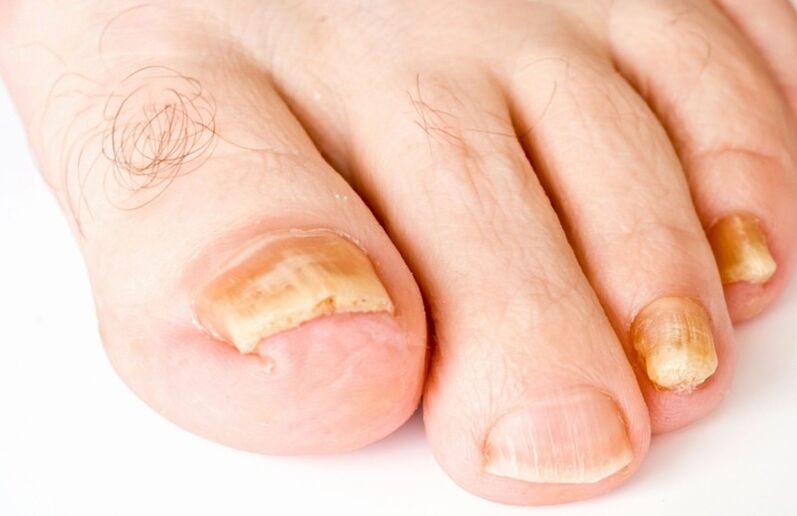
- Advanced or dystrophic stage.Deep nail damage occurs.In this case, the infectious process passes from the thumb to the rest.The entire surface of the nail plate is affected by the fungus and peels off from the bed, becoming loose.The patient is bothered by severe itching.When pressing on the affected areas, pain and a sensation of pulsation occur.Because of this, the patient cannot wear closed shoes.
Dystrophic stage of onychomycosis
At the third stage of development of the infectious process, infection of the skin of the foot is possible.In this case, the fungus can be cured only with the help of complex therapy, which involves the use of both local drugs and systemic medications (tablets for oral administration).
Reasons for the development of fungus on the big toe
The main reasons that cause the development of onychomycosis are:
- contact with a person who is a carrier of a fungal infection;
- neglect of hygiene standards;
- wearing someone else's or tight shoes that don't fit;
- weakened immune system;
- visiting a bathhouse, sauna, swimming pools or beauty salons, where non-disinfected instruments may be used;
- injuries to the nail and skin that surround it;
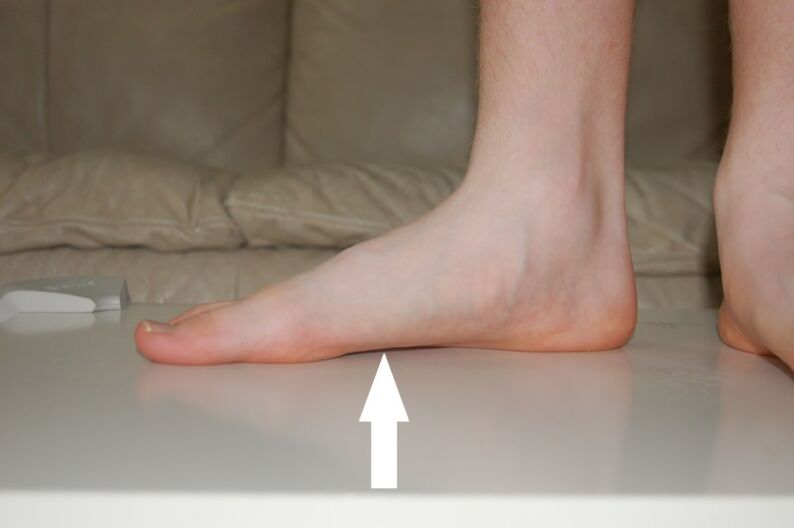
- flat feet;
- long-term use of antibacterial drugs;
- hyperhidrosis (increased sweating in the feet);
- the presence of endocrine or immune lesions;
- disturbances in the circulatory system, which is especially important for elderly patients;
- varicose veins;
- diabetes mellitus
Flat feet is one of the causes of onychomycosis
An important factor that increases the risk of developing onychomycosis is old age.Elderly people suffer from poor blood supply to the extremities, which also increases the risk of developing fungal infections.The causative agent of the disease gets onto the nails or skin from contaminated objects or through contact with a carrier.The pathogen spreads quickly, capturing new areas.The fungus enters the subungual space through damaged areas of the nail plate or areas of the skin surrounding it.The fungus spreads quickly, heading towards the nail bed.The rate of advancement exceeds the rate of plate growth.Soon the pathogenic microorganism reaches its target and provokes changes in the structure of the nail.It has been found that men are 3 times more likely to suffer from the fungus.The nail plates are affected by such types of fungi as dermatophytes, molds and yeasts.
When should you see a doctor?
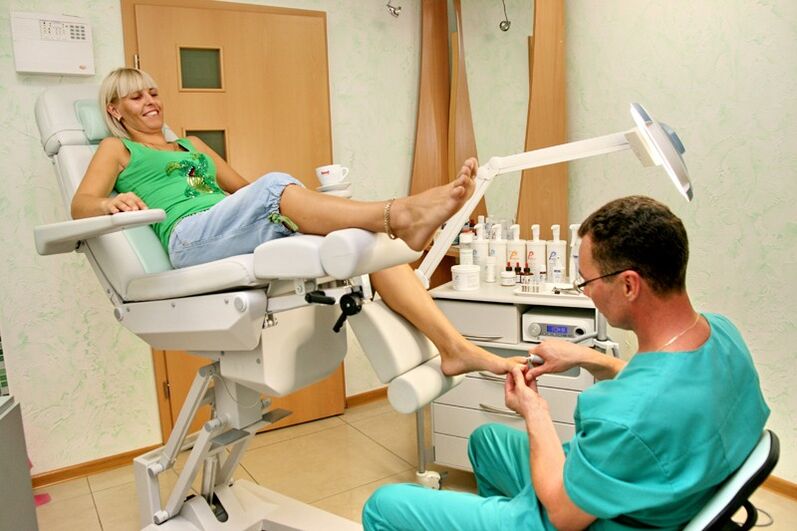
You should consult a doctor at the first manifestations of a fungal infection.You should not wait until obvious signs of the disease appear: the formation of white spots and even moderate itching in the foot area should be a reason to contact a specialist - a mycologist or dermatologist.
Diagnostics
Diagnostic measures that will help identify the disease and its stage include:
- visual inspection of the nail plates;
- taking a tissue sample from the affected nail;
- cultural examination - inoculation of material received from the patient on a nutrient medium to identify the type of microorganisms that have affected the nails.
In some cases, a specialist conducts a differential diagnosis and distinguishes onychomycosis from diseases such as lichen planus, psoriasis, and keratoderma.
Treatment of fungal nail infections at the initial stage of development
If the disease was detected at an early stage, it will be much easier to cope with it.In this case, it is usually sufficient to use local agents that directly affect the affected nail.The duration of treatment depends on the condition of the nail plate and can vary from two to four weeks.Any medications that are intended to treat even mild forms of nail mycosis should be prescribed by a doctor.
Therapy of advanced onychomycosis
In severe cases of the fungus, as well as in the case of an advanced infectious process, complex treatment is indicated.Systemic antifungal agents must be prescribed if there are no contraindications.The patient is prescribed medications:
- Systemic antibiotic in tablet form.The active substance of the drug reaches the localization of pathogenic microorganisms and has a fungicidal effect.
- The drug inhibits the development of pathogens and destroys them.The course of treatment and dosage are determined by the attending physician.The product causes adverse reactions.
- The drug has a fungicidal effect.The active substance gradually accumulates in the layers of the nail plate, which makes it possible to destroy even those fungi that are localized quite deeply.
Also, with advanced nail fungus, procedures are effective that allow you to get rid of the infected plate.You can do this in the following ways:
- Surgical removal.This method involves prying the plate with a sharp surgical instrument and tearing it off the bed.After the operation, a bandage is applied.The surgical method is traumatic and rarely used.Instead, minimally invasive methods are used.
- Removing the plate using chemicals that promote rapid peeling of the affected nail.In this case, the problem area is treated with a special solution, wait until the drug begins to act, and then use tools that help quickly separate the plate from the nail bed.
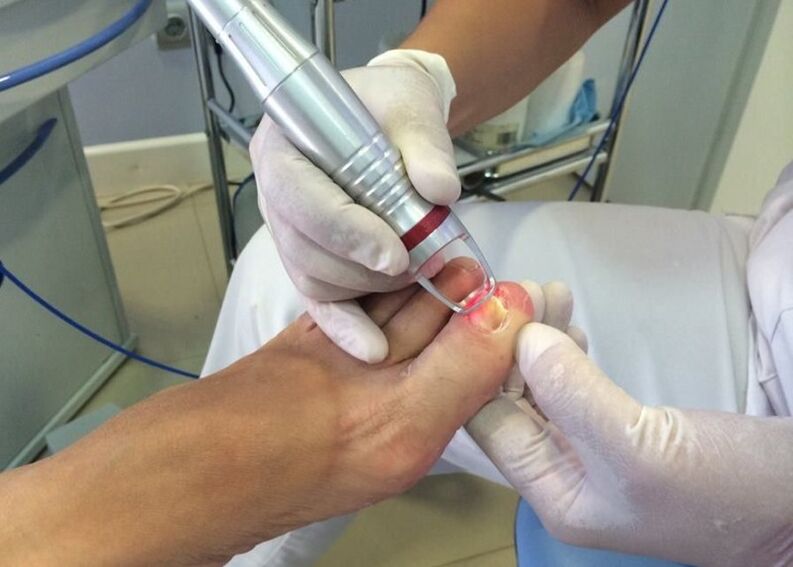
- Laser treatment.This is a modern, painless method that will quickly get rid of fungal nails.The laser acts on the plate, heating it to high temperatures as quickly as possible.The beam penetrates deeply and neutralizes pathogenic microorganisms.The method is bloodless and absolutely safe, as it does not cause burns.
In advanced stages of onychomycosis, it is necessary to strictly follow the doctor’s recommendations, since the lack of adequate treatment increases the risk of generalized damage to the body by a fungal infection.
Traditional methods
Treatment of nail fungus on the big toe can also be carried out using traditional medicine methods.Such methods are additional in nature and cannot be the basis of therapy.The most popular folk remedies include the following:
- Onion gruel.You need to grate several onions and apply the resulting mass to the affected nails.Secure the top with a bandage.Leave for 15-20 minutes, rinse.
- Hydrogen peroxide.First soak the affected feet in a bath of water to soften the nails as much as possible.After this, remove the top layer from the plates.Soak a piece of gauze with hydrogen peroxide and wrap the phalanx of the finger with the affected nail, capturing the immediate lesion.Leave for 40-50 minutes.You can repeat the procedure up to two times a day.
- Apple cider vinegar.It is important to use a natural product.Take 2 tablespoons of vinegar and add the same amount of vodka, as well as a tablespoon of glycerin.Soak a cotton swab in the resulting mixture and apply to your nails for 15 minutes.Repeat 4 times a day.
Traditional recipes help alleviate the severity of the symptoms of the disease and eliminate discomfort, but they are not able to destroy the causative agents of the disease.
The course of the disease and features of treatment of nail fungus in children
Onychomycosis is quite rare in children.The main cause of the disease is weak immunity due to incomplete development.Symptoms of onychomycosis in children are:
- the plates lose their natural pinkish color, the appearance of gray or white spots on the surface;
- unevenness and tuberosity of the nail plates;
- crumbling and brittle nails;
- redness and swelling of the skin that surrounds the child's infected nail.
To treat nail fungus in children, only topical preparations are usually used.If necessary, systemic agents are also prescribed.Capsules are the safest for children.Antifungal medications for oral administration should only be prescribed by a doctor.
Features of treatment in pregnant and lactating women
During pregnancy, there is a high risk of developing onychomycosis if the woman previously suffered from the disease and did not completely cure it.This is due to the weakening of the immune system that occurs during pregnancy.It is important to cure the fungus in a timely manner, since in severe cases it creates a risk of bacterial infection, which threatens the health of both the mother and the fetus.Systemic drugs cannot be used during pregnancy, as they have a high level of toxicity.During pregnancy and lactation, local medications should be used, but only those that are safe for the expectant mother and her child.These include sulfur-salicylic ointment, amikazole ointment.
Treatment in the elderly
In older people, decreased immunity is a natural age-related phenomenon, which creates additional risks for the development of onychomycosis.In this case, the specialist also shows caution when choosing a remedy for treating nail fungus.Systemic drugs are prescribed if the disease lasts a year or more, as well as in case of extensive lesions and dystrophic changes in the nails.
Prevention measures
If you notice signs of fungus on your little finger or thumb, you should immediately consult a doctor.But you can take measures to prevent the development of this disease.The following recommendations should be followed:
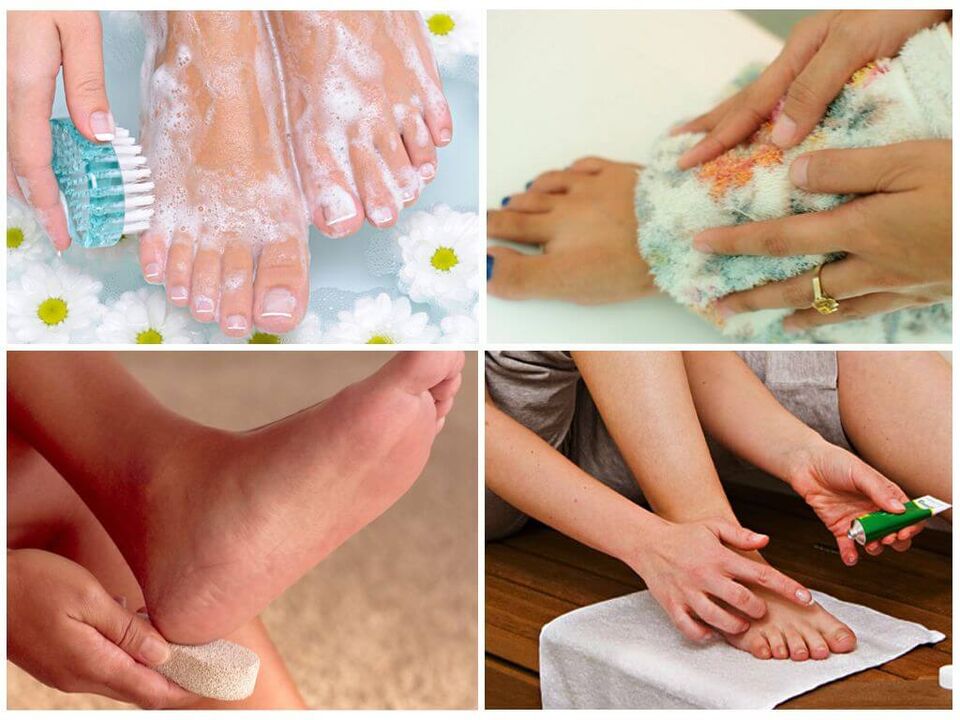
- wash your feet at least once a day;
- Wash your socks daily and put on clean ones;
- in case of excessive sweating, use special deodorizing products for the feet;
- wear shoes that fit properly, they should not be too tight, and they should also be washed daily;
- use only personal hygiene products, as well as tools for manicure and pedicure;
- when visiting the pool, beach, sauna, use personal rubber shoes;
- wash your feet with soap after visiting the pool, bathhouse, and, if necessary, use pharmaceutical products for prevention.
Toenail fungus is a disease that is quite difficult to cure at the advanced stage.At the first symptoms you should consult a doctor.Treatment depends on the stage of development of onychomycosis: at the initial stage, local drugs are sufficient; at advanced stages, systemic antifungal agents are necessary.